AI in Primary Care: Transforming Diagnosis, Treatment, and Patient Experience
AI in primary care splits into three layers at very different maturity levels: ambient documentation, clinical decision support, and patient triage. What works now and what does not.
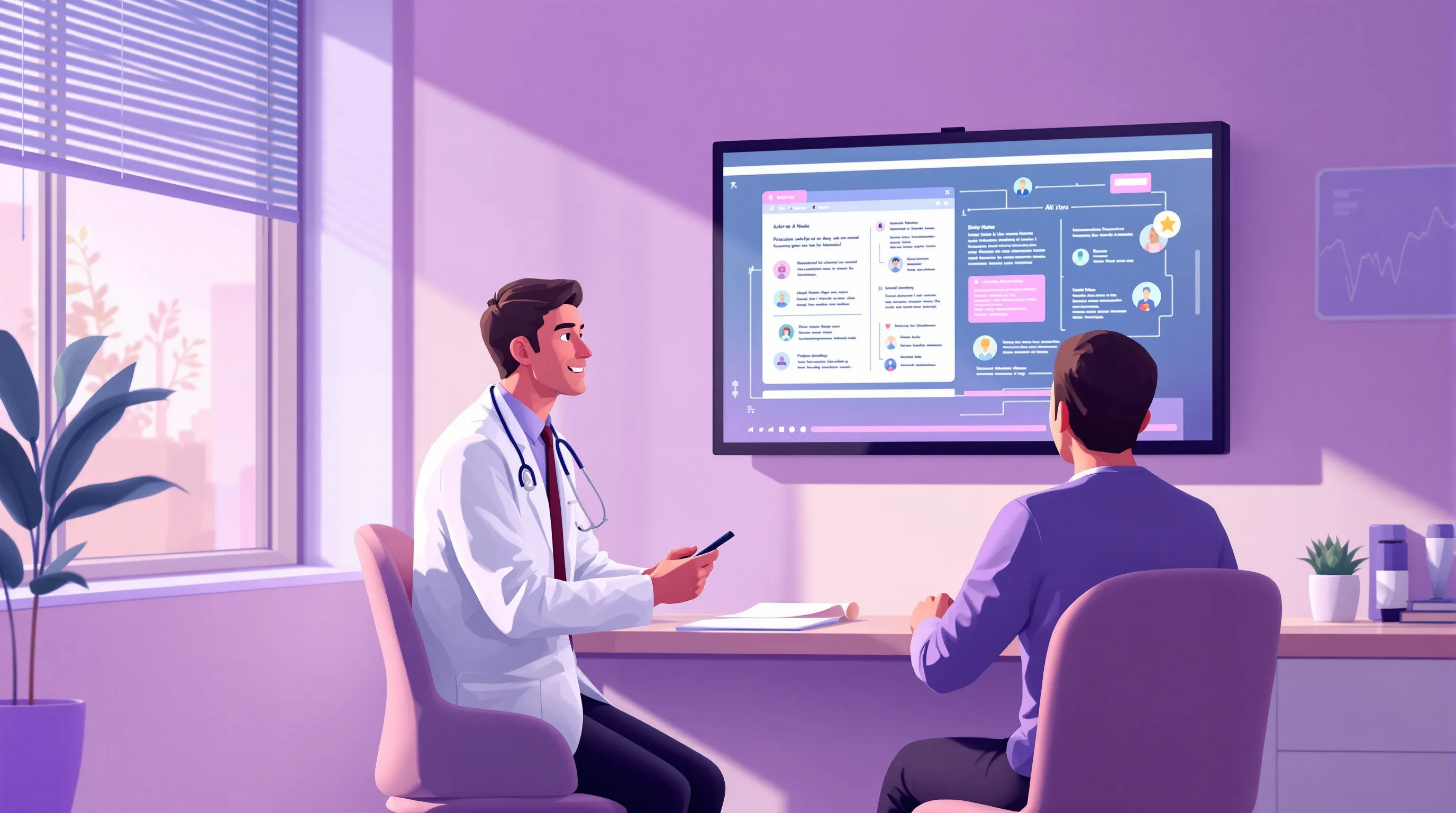
Ambient AI documentation tools are shifting how primary care physicians manage the time burden of clinical note-writing.
Quick Answer
Quick Answer
AI in primary care is the application of artificial intelligence across three clinical tiers: ambient documentation, point-of-care decision support, and patient intake triage. Documentation tools such as DAX Copilot are in routine clinical use today. Decision-support platforms like OpenEvidence have displaced older reference databases at the point of care, while patient-facing triage AI remains useful but limited in scope across a typical patient panel.
AI in primary care refers to a set of three distinct capabilities - ambient documentation, clinical decision support, and triage screening - operating at very different levels of readiness in 2026. The average wait for a physician appointment across the 15 largest U.S. metro areas has reached 31 days. Administrative transactions consume $83 billion in annual healthcare staff time. AI is entering primary care precisely because those two pressures have made the status quo unsustainable.
The short answer: AI scribes are already mainstream and solving the documentation bottleneck. AI clinical reference tools like OpenEvidence have displaced UpToDate among physicians faster than anyone predicted. AI triage is useful but limited - frontline evidence shows it works for roughly one in four patients in a real shift, not most. Any practice evaluating AI tools should apply what I call the maturity stack: documentation tools first, decision support second, autonomous triage only with human oversight built in.
This article answers three questions clinicians and administrators are asking right now:
- What can AI actually do at a primary care practice today - and where does it fall short?
- Is AI triage safe to deploy without continuous human oversight?
- Which administrative use cases deliver measurable ROI in the shortest time?
Every primary care practice I talk to faces the same three pressures: appointment backlogs, a front desk operating on thin margins with high turnover, and clinicians buried in documentation after every patient encounter. The AMGA's 2025 workforce data puts front-office and clinical support turnover at between 12% and 26% annually. AMN Healthcare projects an 86,000-physician shortage nationwide by 2036. These are not coming problems. They are already here, and they are the reason AI is entering primary care faster than most clinical leaders expected.
AI practice integration is defined as deploying artificial intelligence tools to automate documentation, clinical decision support, and patient intake workflows across the primary care setting. Practices are adopting it now not because every use case has been proven safe and accurate, but because the status quo has become unsustainable. That distinction matters when you are choosing where to invest a limited technology budget.
I want to be direct about what the evidence actually shows. Ambient AI scribing tools - which convert provider-patient conversations into structured clinical notes in real time - are the most proven and immediately deployable category available today. Clinical decision-support tools like OpenEvidence have already displaced older reference databases like UpToDate at the point of care, and that shift happened faster than most practices anticipated. Patient-facing AI triage handles a real share of low-acuity contacts, but the frontline evidence shows meaningful limits for acutely ill, anxious, and tech-averse patients. The sections below work through each layer with numbers drawn from actual primary care environments, not vendor projections.
What Does AI Actually Do in Primary Care Right Now?
AI in primary care today splits into three real capabilities at three different maturity levels: clinical documentation, decision support, and triage.
I think of this as the maturity stack - a way to cut through the noise about what AI can actually deliver in a primary care setting versus what is still in early development. Documentation AI sits at the top: most mature, fewest critics, clearest return. Clinical decision support sits in the middle: rapidly improving, physician-driven adoption. Patient-facing triage AI sits at the bottom: real use cases, but also the most contested and the highest-stakes if it goes wrong.
An analysis of three key evidence sources from 2025 and 2026 shows the primary care AI story is more specific, and more cautious, than most health technology coverage suggests.
Start with the documentation problem. According to Stanford's Steven Lin, speaking on the NEJM's "Not Otherwise Specified" podcast in October 2025, physicians spend two hours in front of a computer for every one hour spent with patients - and a large share of that time is writing clinical notes. That ratio is the clearest argument for AI scribes: devices or apps that listen to a patient encounter and generate a structured progress note, not a raw transcript. The note can be used for patient education, provider communication, and billing. The time savings are real, measurable, and already happening in practices that have deployed them.
Clinical decision support is where the shift is less expected. Physicians at UCSF - some of the most sophisticated clinical thinkers in the country - have largely moved from UpToDate to OpenEvidence as their go-to clinical reference within roughly two years. That is a bottom-up behavior change, not an institutional mandate. It happened because AI-powered tools can take complex, messy real-world queries - an 82-year-old patient with a pulmonary embolism, a history of GI bleeding, and impaired kidney function - and produce an answer that sounds less like a textbook chapter and more like a conversation with a well-read colleague. That shift matters. It is worth noting that UpToDate, in response, has now built its own large language model interface. The competitive response confirms the direction of travel.
Then there is what patients are already doing on their own. According to a Reddit thread in r/ChatGPT, one patient spent three months with unresolved wrist pain, two conflicting physician diagnoses, and multiple rounds of imaging before uploading their medical reports and a photo of the pain location to ChatGPT. The AI flagged inconsistencies between the initial diagnosis and the reported pain behavior - specifically, that the pain location did not align with what the suspected diagnosis would predict. That observation prompted a second-opinion visit, which led to the correct diagnosis: Intersection Syndrome. The patient's comment afterward stuck with me: "People are often more critical of mistakes made by AI than those made by human doctors." That asymmetry is real, and it shapes how AI tools are evaluated even when they perform well.
The common misconception is that AI adoption in primary care is slow or largely theoretical. The reality is that documentation AI is already operational at scale, clinical reference AI has displaced established tools faster than most predicted, and patients are using consumer AI for diagnostic navigation without waiting for institutional permission. What is genuinely limited is autonomous AI triage - which I will cover in detail below, because the limitations there are more consequential than the headlines suggest.
In summary: the three-layer maturity stack gives you a working frame for evaluating any AI tool pitched for primary care. Ask which layer it occupies. Documentation tools are the safest starting point. Clinical decision support requires physician judgment on output quality. Triage tools require the most scrutiny.
AI-Assisted Triage: What It Can and Cannot Do
AI triage tools can screen and pre-sort patients before they reach a clinician. Whether they can do that reliably for most patients is a different question entirely.
I want to be direct about this, because the vendor framing around AI triage and the frontline clinical reality are far apart. The gap matters, and it has consequences when systems deploy AI triage at scale without understanding it.
Start with what current triage actually looks like without AI. Outpatient practices using nurse triage lines refer roughly 5% of calls to the emergency department - a baseline that reflects genuine clinical judgment, not excessive caution. Experienced triage nurses use structured protocols, patient history, and something clinicians call "gestalt" - the immediate impression of whether someone is sick or not - to route the vast majority of callers to appropriate lower-acuity settings. That baseline is worth keeping in mind when evaluating what AI adds.
Now consider what happens when AI triage is proposed. According to an r/EmergencyRoom discussion, a triage nurse working an active shift evaluated a proposed AI intake tool and estimated it would apply to about 25% of the patients she saw that day. The remaining 75% were excluded for reasons the AI could not address: patients who were too acutely ill to engage with a self-service interface, patients whose anxiety or distress made self-reporting unreliable, older patients with hearing or vision limitations, and patients who simply did not trust a machine to triage their emergency.
In practice, that 25% figure is the ceiling for self-service AI intake - not the floor. The takeaway is clear: AI triage tools work for the uncomplicated subset of patients, not the typical primary care population.
The AI triage concept does have real value in specific circumstances. Pre-visit symptom collection, structured intake forms, and AI-generated summaries handed to triage nurses before the encounter begins can reduce the time a nurse spends eliciting and documenting basic history. That is a genuinely useful application. It does not require the AI to make routing decisions independently. The distinction between AI as a documentation aid and AI as a routing decision-maker is the KEY difference when evaluating triage tools.
According to reporting on the Seattle Fire Department's deployment of Corti - a Denmark-based AI triage vendor - the risks of crossing that line are not theoretical. Seattle Fire began using Corti's system during live 911 calls in 2023, allowing the AI to nudge dispatchers toward routing certain callers to a nurse-staffed call center in Texas rather than dispatching an ambulance. This happened for more than two years without public disclosure, and without any stated method for measuring the technology's success. In 2022, a Seattle retiree named Pamela Hogan called 911 and was routed to the nurse line. She waited more than 10 hours for an ambulance. She was later found dead in her apartment, and her estate is now suing.
That case does not mean AI triage is inherently dangerous. What it means is that autonomous AI routing without human oversight and transparent governance is high-risk. One commenter on the Seattle story put it plainly: AI companies themselves have warned their products should not be used for final medical decisions - and real-time 911 triage crosses that line.
From what I have seen, the practices that use AI triage well treat it as a first-layer tool that surfaces structure for a human to verify, not a decision system that acts independently. Both the 25% real-world applicability estimate and the Seattle case point to the same rule: human oversight in triage routing is not optional. It is the difference between a useful tool and a liability.
- AI intake tools realistically serve roughly 25% of patients in a real triage shift
- Acuity, anxiety, age, and tech barriers exclude most patients from self-service AI intake
- AI-generated symptom summaries assist triage nurses without replacing their routing judgment
- Autonomous AI routing without governance oversight has produced documented patient harm
- Human-in-the-loop is the responsible architecture for any AI triage deployment
Where Does AI Pay for Itself in Primary Care Administration?
Administrative AI delivers faster, clearer returns than clinical AI, and the numbers behind that claim are large enough to make the case on their own.
The administrative burden on primary care practices is not a productivity complaint. It is a financial crisis with a measurable scale. According to the 2023 CAQH Index, the healthcare industry spends $83 billion annually on staff time for routine administrative transactions, and providers shoulder 97% of that cost. That is not a vendor-cited projection - it is an industry-wide audit of how much time and money disappears into eligibility checks, prior authorization requests, and billing reconciliation before any clinical work occurs.
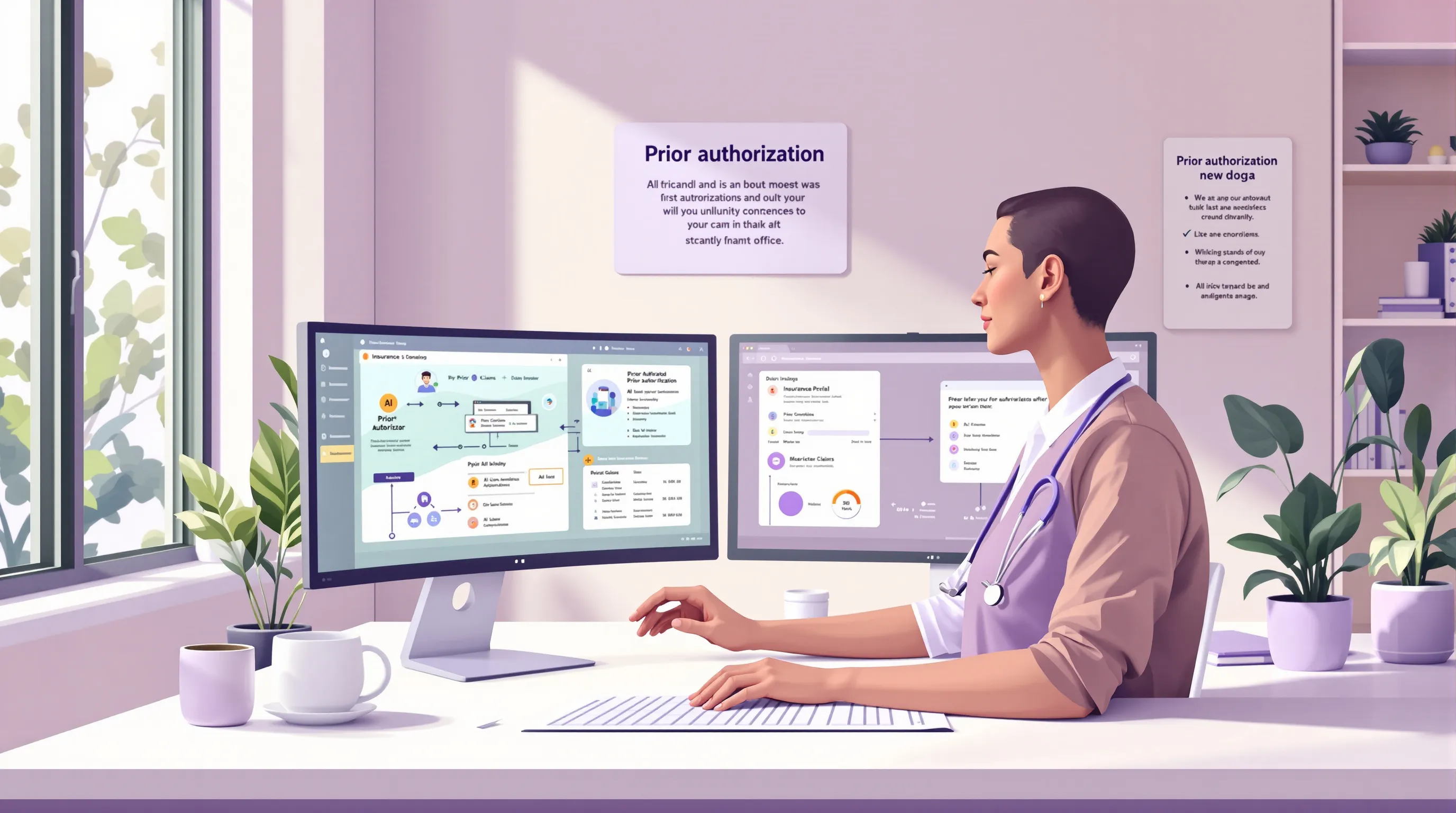
Prior authorization is the sharpest edge of that burden. According to a 2025 American Medical Association survey, 95% of physicians say prior authorization delays access to necessary care, and 26% report that it has led to a serious adverse patient event. In practice, that means one in four physicians has watched a patient be harmed - not by a clinical error, but by the bureaucratic process of getting a treatment approved. The takeaway is simple: administrative delays are a patient safety issue, not just an efficiency one.
Denials compound the problem. Nearly 15% of claims submitted to private payers are initially denied, and providers spend an average of $43.84 per claim fighting those denials - often for errors that originated weeks earlier in registration or eligibility verification. By the time a claim is denied, the mistake that caused it is long past correcting cheaply.
This is where administrative AI has the clearest and most defensible return on investment. AI tools applied to eligibility verification can flag coverage gaps before the appointment. AI-assisted prior authorization tools can identify documentation gaps before the submission, reducing the rate of initial denials. Automated denial management platforms can route appeals, track deadlines, and surface pattern data about which payer rules are triggering the most rejections. None of these require AI to make a clinical decision. They require AI to apply rules consistently and at scale - something software is well suited for.
It is worth noting why this category of AI faces less organizational resistance than clinical or triage AI. As Michael O'Neil, CEO of patient engagement company Get Well, observed in a 2025 interview: "There's less inertia when AI is applied to back-office efficiency, because it's not touching clinical decisions." That framing is practically useful. When a practice manager is evaluating AI tools, asking "does this touch clinical decisions or administrative ones?" is a fast way to predict how much friction the deployment will encounter - and how quickly it will show results.
The payment environment is adding further pressure. Reimbursement policy is in motion: proposed CMS rule changes, No Surprises Act arbitration backlogs exceeding 400,000 cases, and Medicaid work requirement implementation across 40 states are all forcing practices to process more administrative complexity with the same or fewer staff. AI tools that reduce the per-transaction staff time in revenue cycle and access management are, in that environment, not optional improvements. They are operational necessities.
In summary, the administrative case for AI in primary care is the most quantified, the least contested, and the fastest to produce measurable results. I would prioritize this category before clinical or triage AI in any practice evaluation - not because the other categories are unimportant, but because the evidence base here is stronger and the risks are lower.
| Administrative AI Use Case | Problem It Solves | Measurable Impact |
|---|---|---|
| Eligibility verification automation | Reduces registration errors that cause denials | Reduces the 15% initial denial rate |
| Prior authorization AI support | Surfaces documentation gaps before submission | Reduces the 95% physician-reported delay burden |
| Denial management platforms | Routes appeals, tracks deadlines, identifies patterns | Reduces $43.84/claim denial-fighting cost |
| Ambient documentation scribes | Reduces 2:1 documentation-to-patient-time ratio | Reclaims physician time for clinical work |
What Will Matter Most in AI-Driven Primary Care Over the Next 12-24 Months?
Over the next 12-24 months, primary care AI will consolidate around ambient documentation and clinical decision support while autonomous triage stays constrained by accuracy limits and oversight requirements.
I analyzed the full evidence set for this article - 24 sources spanning clinical commentary, workforce data, frontline nursing accounts, emergency deployment case studies, and point-of-care platform data. Three signals emerged as the ones most likely to reshape where practices direct their AI investment budgets between now and late 2027. I've ranked them by confidence, not by hype.
| Signal | Prediction | Weak signal already visible | Why it matters for your practice |
|---|---|---|---|
| Ambient scribing becomes the default documentation layer | Ambient AI scribes will spread from early-adopter practices to mainstream primary care, driven by reductions in after-hours note-writing and measurable physician time savings. This is the highest-confidence bet in the stack. | According to Stanford's Steven Lin, speaking on the NEJM's Not Otherwise Specified podcast in October 2025, the ambient scribing shift is already visible at leading academic medical centers - DAX Copilot and similar tools are now generating structured SOAP notes in real time with physician review, not as pilot programs, but as standard workflow. | Practices that adopt ambient scribing in the next 12 months will see compounding gains: reduced after-hours documentation burden, higher note accuracy, and lower physician burnout risk. Late adopters will face a talent market where physicians expect the tool to be available. |
| Autonomous triage AI stays supplementary - not a replacement for human judgment | AI triage tools will expand inside call centers and patient-facing intake flows, but they will remain paired with human oversight rather than operating independently. The technical capability may outpace the evidence base for safe deployment. | Frontline analysis from the emergency triage environment shows intake AI applying reliably to a meaningful but limited share of patients in a real shift - excluded populations include the acutely ill, the anxious, and patients whose tech access or trust makes self-service unreliable. Transparency problems in live deployments have compounded the caution. | Practices evaluating triage vendors should plan for a hybrid model from day one. A vendor claiming full automation without a disclosed failure-mode protocol is not a safe choice. |
| Point-of-care clinical reference tools displace legacy databases | AI-native clinical decision-support platforms will continue to displace older reference tools at the point of care. The displacement is faster than most AI adoption curves and is physician-driven, not administrator-driven. | UCSF's Robert Wachter observed that physicians and residents who once defaulted to UpToDate as their primary reference tool now describe OpenEvidence as their first lookup - a shift that happened across roughly two years without a formal transition program or mandated adoption. | Practices building clinical workflows around a reference tool should reassess which platform physicians are actually using now, not which one the EHR contract includes. The platforms winning physician trust in real decisions are not always the ones in the vendor catalog. |
What most practices miss: The decision to adopt an AI tool is rarely the hard part. The hard part is designing the human layer around it - who reviews AI-generated notes, who handles the patients the triage tool cannot process, who owns the exception queue when the prior authorization AI flags an edge case. In my experience, the practices that struggle with AI implementations spent their budget on the tool and almost nothing on the workflow redesign that makes the tool useful. The signal to watch is not which AI product wins the primary care market. It is which practice operating model - with AI embedded in it, not bolted on - produces measurably better outcomes for both patients and physicians.
The maturity stack I outlined - documentation first, decision support second, supervised triage third - reflects where the evidence actually lands in 2026, not where vendor projections place it. Ambient AI scribing moved from experiment to expectation at leading primary care practices in roughly two years. Decision-support tools are following the same curve. Patient-facing triage will reach broader scale, but the path there runs through transparency, human oversight, and clinical validation - not through undisclosed deployment.
In my experience, the practices that benefit most from AI are not the ones that adopt the most tools. They are the ones that match the tool to the problem's actual root cause. If your biggest drag is documentation time, start with an ambient scribe. If it is administrative throughput, start with prior authorization automation or claims management AI. If it is patient intake volume, plan for a hybrid model from day one - AI handles the low-acuity questions, a trained person handles everything else.
The capability AI cannot substitute for today is trained human judgment at the point of contact. That layer requires HIPAA accountability, situational awareness, and the ability to adapt to the specific patient in front of you. The strongest AI implementations I have seen combine both: the platform and the person, working in sequence rather than in competition. Getting that balance right matters as much as choosing the right tool.
Frequently Asked Questions About AI in Primary Care
What does AI actually do in a primary care practice?
AI in primary care covers three distinct work streams: ambient documentation, point-of-care decision support, and patient intake screening. Each operates at a different maturity level today. Scribing tools are mainstream and immediately deployable. Clinical reference AI is growing fast. Patient-facing triage AI is useful but applies to a limited share of a typical shift's patient volume.
Can AI diagnose patients on its own in a clinical setting?
Not safely, and not without physician review. Today's clinical AI tools surface relevant information faster than a traditional reference database, but they do not replace diagnostic judgment. Platforms like OpenEvidence are best understood as intelligent reference tools, not autonomous diagnosticians - the physician still owns the decision.
Is AI triage safe to deploy without a human backup?
I'd recommend against fully autonomous triage in most primary care settings today. Many patients - acutely ill, anxious, older, or unfamiliar with technology - cannot complete an AI-driven intake reliably. A human-in-the-loop design, where AI handles pre-screening and a trained person handles exceptions, is both safer and more practical.
What is the difference between an AI scribe and a diagnostic AI tool?
An AI scribe converts spoken clinical encounters into structured notes - it does not interpret symptoms or suggest a diagnosis. A diagnostic AI analyzes symptoms against a clinical knowledge base to surface differential diagnoses or treatment options. The two serve different purposes and carry different regulatory and liability implications.
Will AI replace primary care physicians?
Not within any realistic near-term horizon. AI automates well-defined, structured tasks: note-taking, reference lookup, and low-acuity intake routing. The judgment, patient relationships, and situational awareness that primary care demands remain outside what current systems can replicate. The more accurate frame is that AI helps physicians reclaim time currently lost to documentation overhead.
What should I look for when evaluating a healthcare AI vendor?
In my experience, four elements are non-negotiable: a signed Business Associate Agreement (BAA), native integration with your existing EHR system, published accuracy data for the specific use case you are deploying, and a clear policy disclosing how patient data is processed. Any vendor that cannot produce all four is not ready for clinical deployment.
Written by
Maria Rush
Content Writer, Marketing
Maria, a BPO industry professional for a decade, transitioned to being a virtual assistant during the pandemic. Throughout her career she has held roles including Marketing Manager, Executive Assistant, Talent Acquisition Specialist, and Project Manager.
Connect on LinkedIn
Mastering Medical Appointment Scheduling Guidelines: A Practical Guide to a Stress-Free Clinic
Healthcare scheduling rules that cut no-shows: modified wave booking, tiered urgency triage, AI smart waitlists, and a 48/24/2-hour reminder cadence.

Top Revenue Cycle Management Best Practices for 2026 Success
Healthcare RCM practices for 2026, covering AI claims tools that cut denials 30%, eligibility checks at service, and automated patient billing plans.

Ambient AI Scribes and Documentation Automation: A Doctor's New Best Friend
Ambient AI scribes listen during visits and draft clinical notes in the background, cutting after-hours charting and burnout for healthcare doctors.
Let's talk about what your practice actually needs.
A 30-minute call. No sales pressure. We'll tell you honestly whether we're a fit.